The quick version
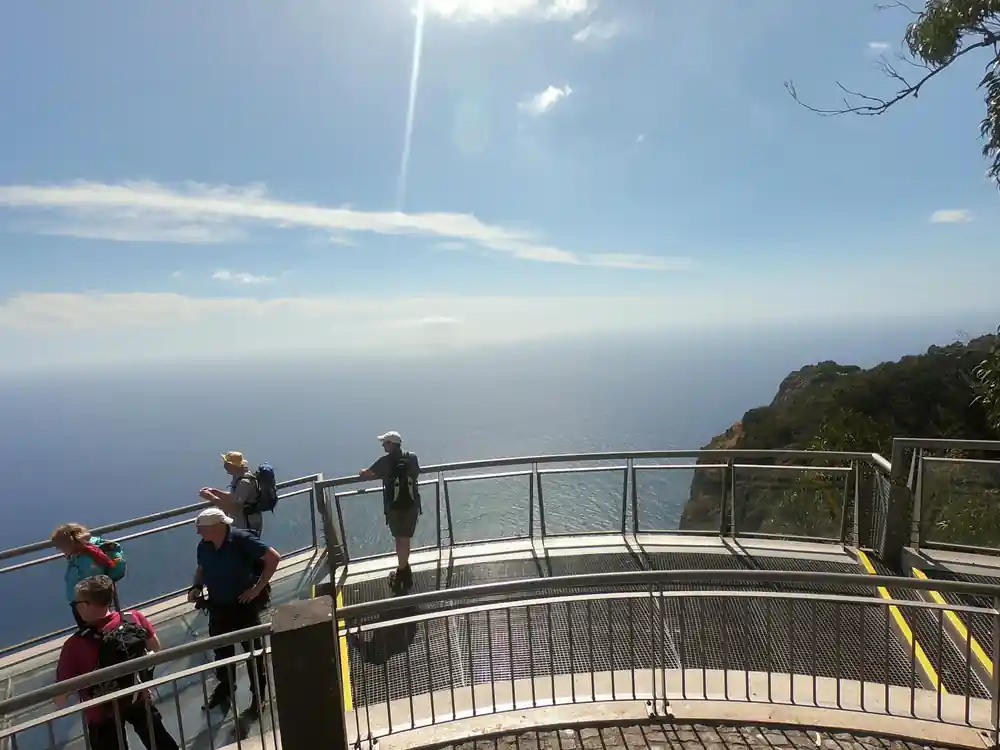
- Cabo Girão is 580 metres high, and the Cabo Girão Skywalk was completed in October 2012.[1][2]
- There is an entrance fee of €2; residents and children up to 12 years old are exempt, and it opens daily from 08:00 to 20:00.[1]
- Cabo Girão is approximately 15 kilometers west of Funchal, and the beach below it is reached by cable car.[3][4]
- The Skywalk, Porto Moniz, Seixal and Fanal 4WD Tour runs for 8 hours and is rated 4.87 from 9,297 reviews.[5]
- Madeira's Laurissilva forest has been a UNESCO World Heritage Site since 1999.[6]
- Top choice Skywalk, Seixal, Fanal 4WD from US$79 Duration8 hours[5]Ratingrated 4.87 from 9,297 reviews[5]Guide languagesFour guide languages[5]Group sizePrivate or small groups available[5] Check availability
- Enchanted Terraces 4WD day from US$80 Duration8 hours[7]Ratingrated 4.78 from 5,647 reviews[7]Guide languagesFive guide languages[7]Group sizePrivate or small groups available[7] See this tour
- West Madeira waterfalls from US$40 Duration8 hours[8]Ratingrated 4.70 from 3,827 reviews[8]Guide languagesFive guide languages[8]Group sizePrivate or small groups available[8] See this tour
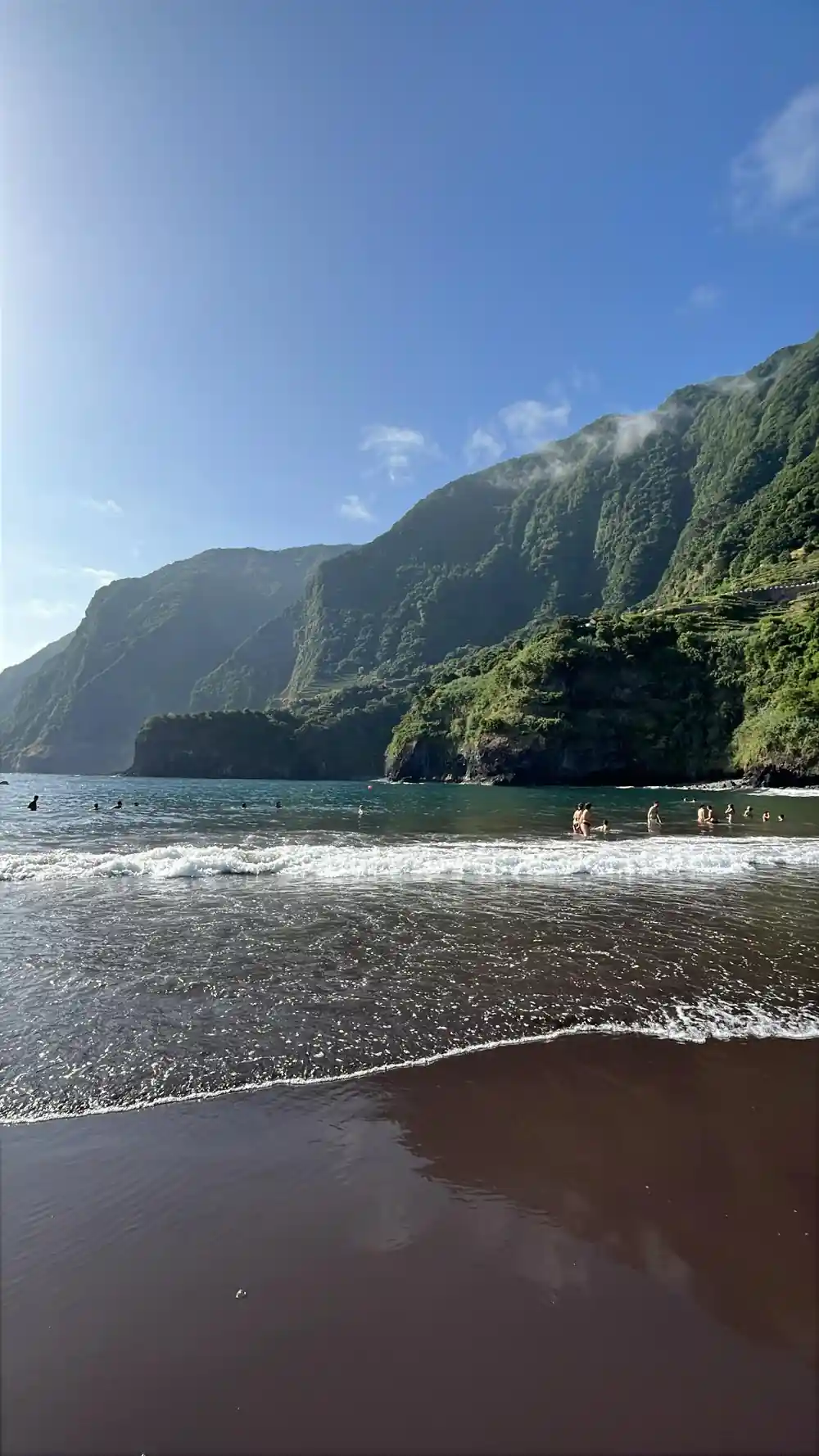
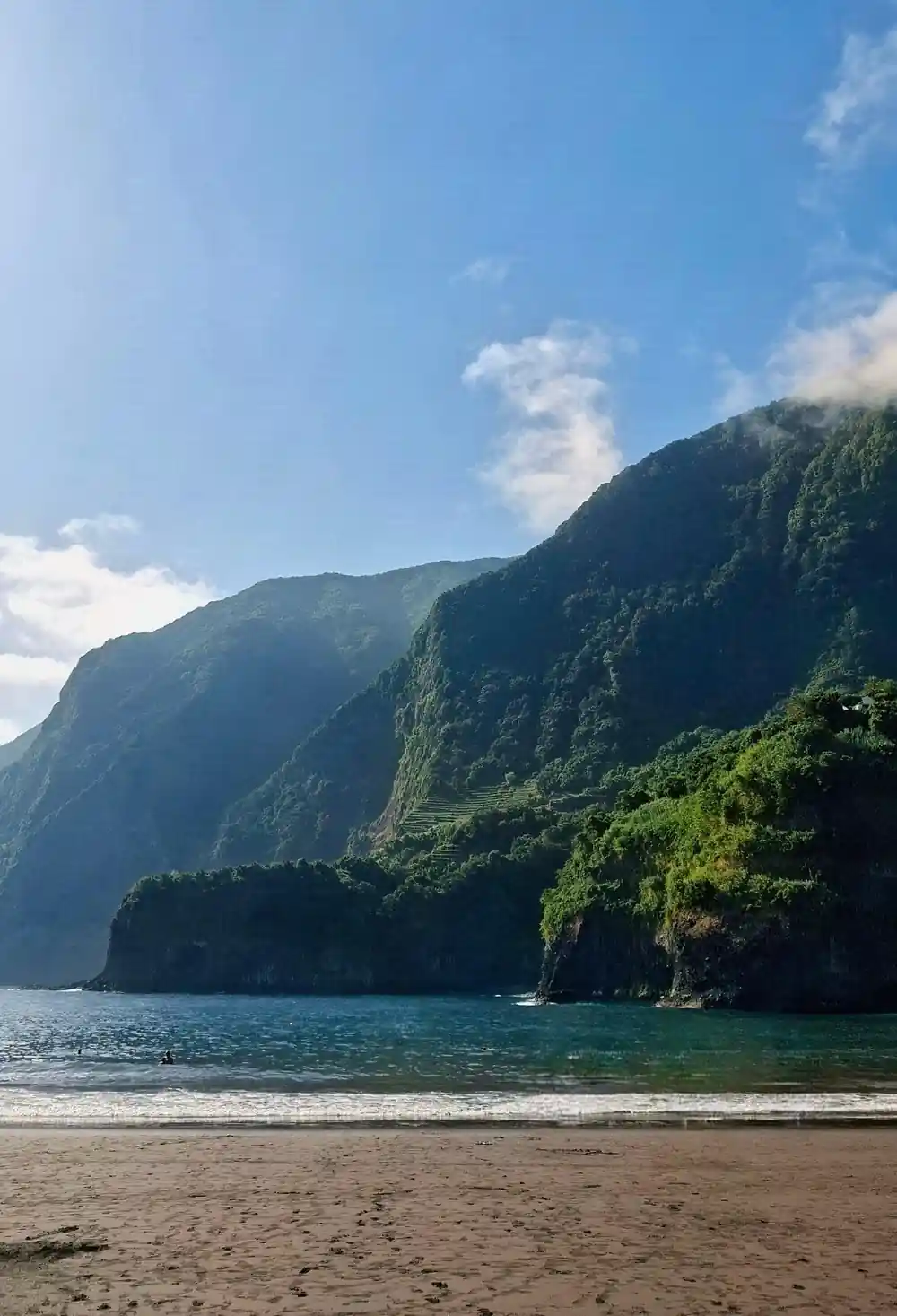
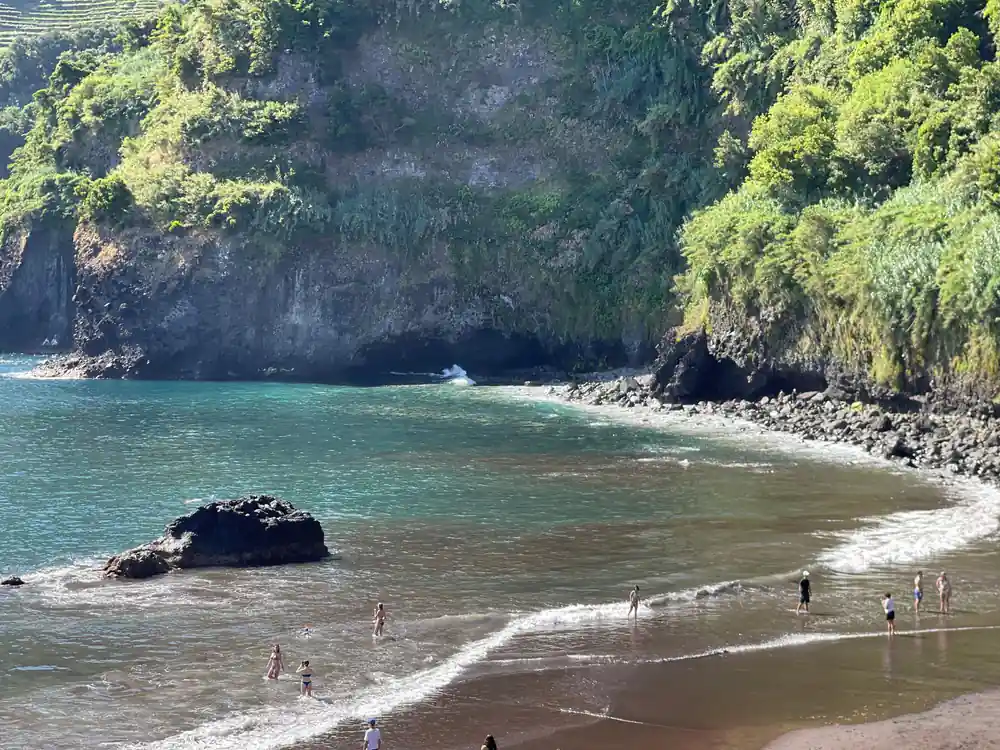
The Fajã do Cabo Girão beach is known for the impressive fertility of its agricultural land. This narrow, lush piece of land can be accessed by cable car.
Is the west coast 4WD day worth it?
Things to check
- Book the Skywalk, Porto Moniz, Seixal and Fanal 4WD Tour from US$79.[5]
- Allow 8 hours for the west coast 4WD day; check starting times when you book.[5]
- Pickup is included; check availability for details and the 11 pickup options.[5]
- Cabo Girão entry is €2; residents and children up to 12 are exempt.[1]
On the day
Stone terraces that hold a hillside in place
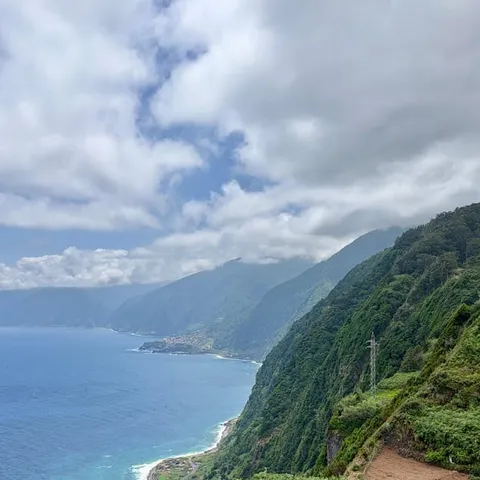
Madeira rises out of the Atlantic almost vertically, and much of its flat ground has been made by hand. The poios, the terraces you see stacked up the slopes, are held by dry stone walls built from the island's own rock. They carry vines, bananas, vegetables and chestnut trees, and they slow the heavy rain so that it does not carry the soil away with it. Look up from almost any road on the south coast and you can follow the lines of them until the slope becomes too steep even for that.
Below Cabo Girão the farming gets more dramatic rather than less. The Fajã do Cabo Girão beach is known for the impressive fertility of its agricultural land, and this narrow, lush piece of land can be accessed by cable car.[4] A return trip on the Teleférico do Rancho cable car costs 10 euros.[10] Fields, sea air and steady sunlight make this shelf one of the greenest on the island.
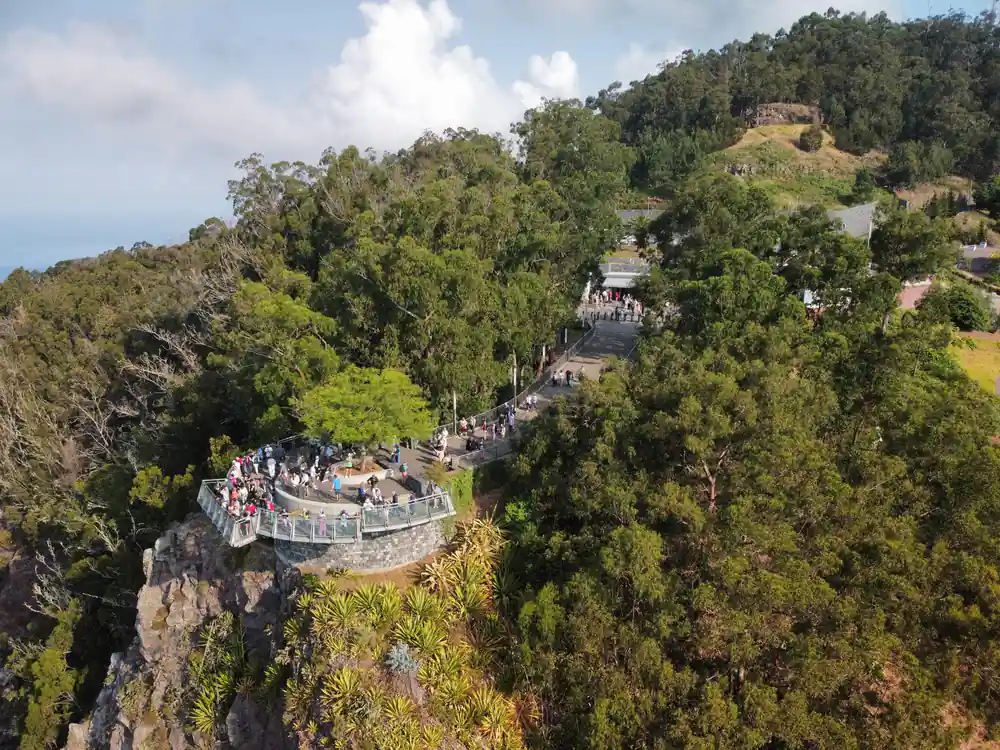
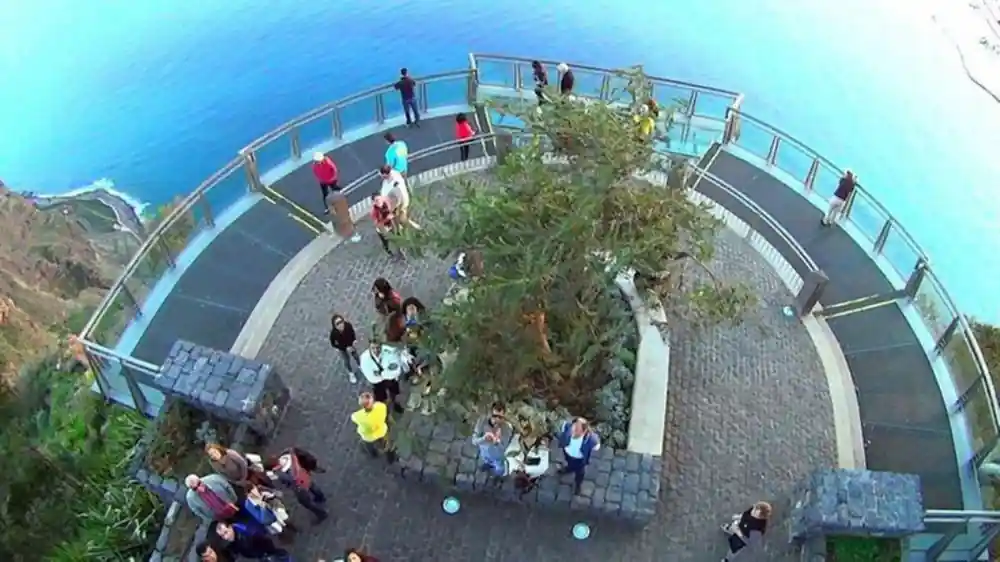
The headland above is worth the stop on its own. Cabo Girão is 580 metres high, which puts the small green fields and the sea far below your feet.[1] The Cabo Girão Skywalk was completed in October 2012, and it is open daily from 08:00 to 20:00.[1][2] There is an entrance fee of €2; residents and children up to 12 years old are exempt.[1]
Smallholdings, small bananas and hand picking
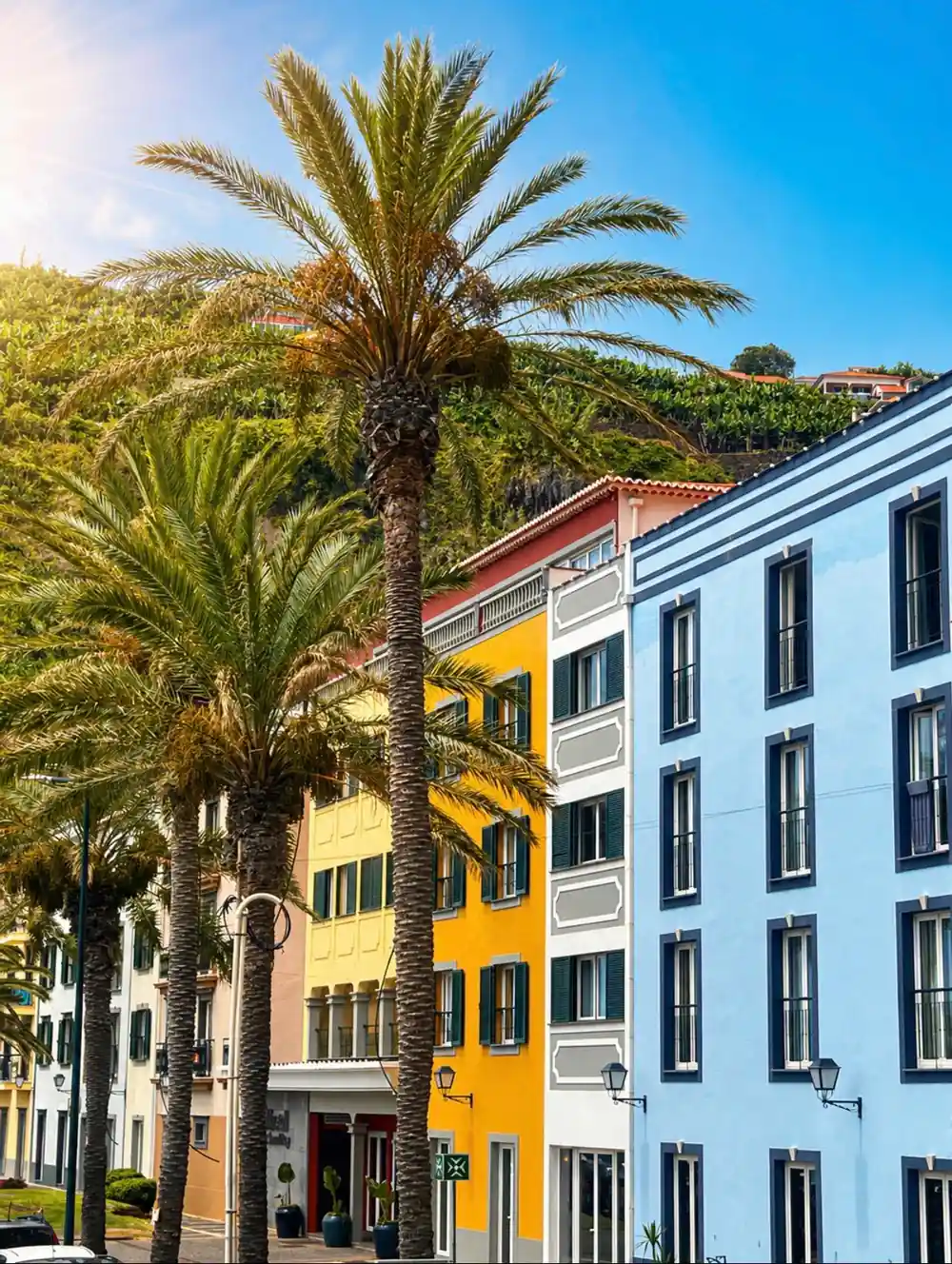
Bananas do well along the warm south coast, in the belt of villages between Câmara de Lobos and Calheta. Madeira has a subtropical Mediterranean climate with even temperatures all year round, with an average annual temperature of 20°C (67°F).[9] The plants keep growing, flowering and fruiting through the year rather than being cut back by cold, and the terraces stay green in every season.
Most holdings are tiny, often just a few terraces, and the fruit is cut by hand and carried down to the road in bunches. Madeiran bananas are smaller than the supermarket standard, thin skinned and quick to ripen, and on the island they are eaten fresh and locally rather than shipped long distances. You will see blue plastic bags tied over the bunches as you drive the coast road, protecting the fruit as it fills out.
Roadside stalls sell bananas, passion fruit, avocados and sugarcane honey, often from the same family plot for generations. It is worth stopping at one: you see what a terraced smallholding actually produces, and the fruit has barely travelled at all. Bring a little cash, since not every stall takes a card.
Terraces stacked above the sea on Madeira's south coast
Ponta do Sol and the villages under the cliffs
The westbound road from Funchal runs through one village after another, each squeezed between the cliff and the sea: Câmara de Lobos, Ribeira Brava, Ponta do Sol, Canhas, Calheta. Cabo Girão, the first big landmark on that road, is approximately 15 kilometers west of Funchal.[3] These are working places rather than museum pieces. Washing hangs above the water, boats come and go from small harbours, and the church squares fill up in the evening.
Ponta do Sol means point of the sun, and the village sits on the bright southern curve of the island with a pebbled bay and a small fort above it. The lanes behind the seafront climb steeply through old stone houses, and the terraces carry on up the hill behind the roofs. If you are on a day tour, this is the sort of stop where a coffee on the front beats another photograph from the bus window.
Between the villages the coast road passes banana terraces, small waterfalls and roadside bars, and the views open and close with every bend. If you are prone to travel sickness, take the front seat and keep your eyes on the horizon, because the westbound route has a lot of corners.
Churchill's easel at Câmara de Lobos
Câmara de Lobos is the closest thing on the south coast to a proper working harbour, and it has been painted many times. Winston Churchill immortalised the bay when he set up his easel at the Espírito Santo Viewpoint in January 1950, facing the sea, and painted a picture he would never forget.[11] The viewpoint still looks down on the same curve of water.
The harbour itself is small enough to walk around in a few minutes, with painted boats pulled up on the quay and fishermen mending gear in the shade. Behind the front, narrow streets climb between bars and restaurants. It is a good place to break a long drive west, and one of the few stops where the village, rather than the view, is the attraction.
If you are travelling with a guide, this is a good moment to ask about the fishing fleet and the town's own history, because the harbour is small and the stories are local. Even on a short stop, walk past the first row of restaurants and along the quay to see the boats properly.
from US$79
The Skywalk, Porto Moniz, Seixal and Fanal 4WD Tour runs for 8 hours, is rated 4.87 from 9,297 reviews, and includes pickup.[5]
Black scabbard fish and painted boats
Espada, the black scabbard fish, is the fish you will see most often on Madeiran menus, long and dark with firm white flesh. It is caught in deep water off the island, landed early and served the same day in the restaurants around the harbour at Câmara de Lobos, usually grilled, sometimes with banana, and almost always with lemon and potatoes. It looks alarming on the slab and tastes mild on the plate.
Along the seafront you can also try poncha, the local drink of sugarcane spirit, honey and lemon, served in small glasses. If you are driving, keep it to one. Otherwise sit by the boats, watch the catch come in, and let the light do the work on the painted hulls.
The Skywalk, Porto Moniz, Seixal and Fanal 4WD Tour lists 11 pickup location options, including Funchal and Câmara de Lobos, so this stretch of coast is where many travellers join the day.[5]
Fanal: laurel forest, mist and old trees
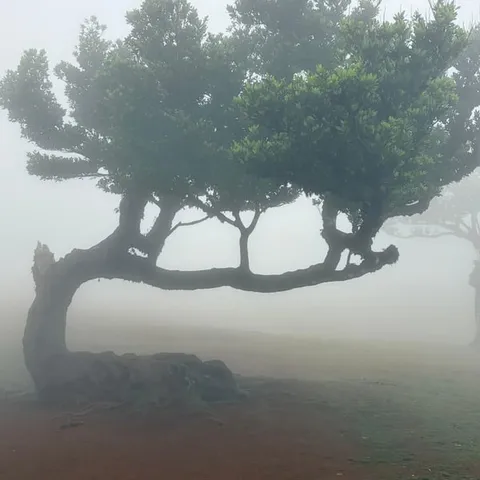
Higher up and further west, the road climbs onto the Paul da Serra plateau, and Madeira turns into a different island. Fanal is presented by Madeira's official tourism board as a mystical, century-old forest that visitors are invited to discover.[6] Madeira's Laurissilva forest has been a UNESCO World Heritage Site since 1999.[6]
The trees here are broad and mossy, shaped by wind and cloud, and the ground between them is soft with ferns and old leaves. On a clear day the light comes through in shafts; on a misty day the dark trunks and the cattle grazing between them appear and disappear as you walk. Both versions are worth the drive.
Bring a jacket and shoes with grip, because the paths can be muddy and the plateau is cooler and damper than the coast. Fanal Forest is among the stops listed for the Skywalk, Porto Moniz, Seixal and Fanal 4WD Tour.[5]
Life on the steep side of the island
Farming a slope means carrying everything up and down by hand, and on Madeira much of that work was done basket by basket. Staircase paths and narrow levadas link the terraces, and the villages sit on the flatter shelves where a church, a school and a bar could be built. The plots are small enough that a family can work one by hand, and from the road you can see how carefully each wall follows the shape of the hill.
Some slopes are served by small cable cars, others by steps cut into the rock or by paths that only a farmer on foot would use. Tourism has added another income to these villages, and the old terraces have quietly become part of what visitors come to see.
The result is a landscape that rewards slow travel rather than a checklist of viewpoints. Watch the walls, the water channels and the small fields as you pass, ask a guide what is growing, and buy something from a roadside stall when you stop. The terraces are not a backdrop; they are the island's oldest piece of engineering, and they are still in use.
How long a west Madeira day tour runs
West Madeira tour prices
From-prices per person on these listings:[5][7][8][12][13]
When to plan your west coast day
Plan your west coast day
Book ahead
The 4WD tour starts from US$79, and you can reserve now and pay later.[5]
Set your pickup
Pickup is included; check availability for details, with 11 pickup location options listed.[5]
Pack for two coasts
Madeira averages 20°C (67°F) across the year; add a rain shell and a warm layer for Fanal.[9]
Keep coins handy
Cabo Girão has an entrance fee of €2, with residents and children up to 12 years old exempt.[1]
Time the skywalk
The viewpoint is open daily from 08:00 to 20:00.[1]
See the terraces, the skywalk and Fanal in one west coast day
from US$80Reserve now & pay later