The quick version
- The south coast is usually drier and sunnier than the north, and a single day west can move you between both worlds.
- Cloud builds against the mountains, so Porto Moniz and the plateau often sit under grey sky while Funchal stays clear.
- Mist is the point at Fanal. Spring and autumn mornings give the laurel forest its moody, film-set look.
- Winter swell can close the Porto Moniz pools, so check the sea and the flags before you plan a swim stop.
- From US$79 and rated 4.87 from 9,297 reviews, with free cancellation up to 24 hours in advance.[1]
- Top choice Skywalk and Fanal 4WD from US$79 Duration8 hours[1]Rating4.87 from 9,297 reviews[1]Group sizePrivate or small groups available[1]CancellationCancel up to 24 hours in advance[1]PickupCheck availability for details[1] Check availability
- Enchanted Terraces 4WD from US$80 Duration8 hours[2]Rating4.78 from 5,647 reviews[2]Group sizePrivate or small groups available[2]CancellationCancel up to 24 hours in advance[2]PickupCheck availability for details[2] See this tour
- West Waterfalls and Fanal from US$40 Duration8 hours[3]Rating4.70 from 3,827 reviews[3]Group sizePrivate or small groups available[3]CancellationCancel up to 24 hours in advance[3]PickupCheck availability for details[3] See this tour
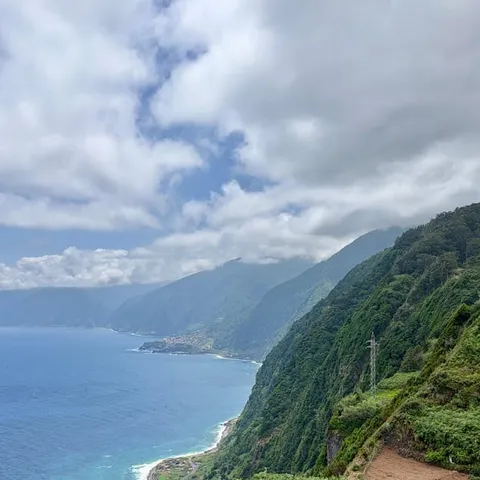
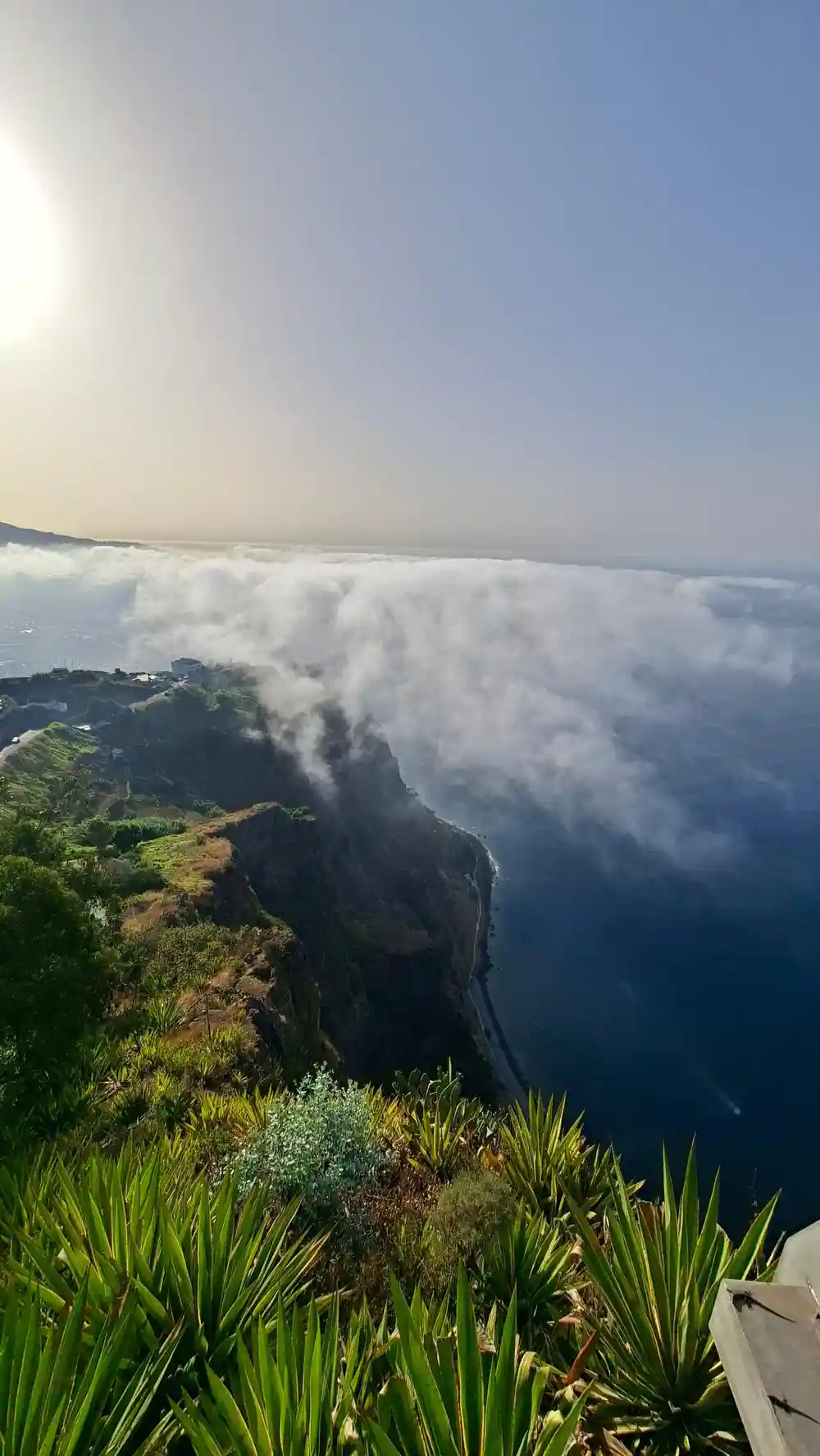
Located on one of the slopes of the Foz da Ribeira do Faial, in the municipality of Santana, the Guindaste viewpoint offers a breathtaking view over the north coast of Madeira.
Is the west coast tour worth it in any weather?
What to pack
- Sunscreen, sunglasses and a cap for the Skywalk and open-top driving
- A light waterproof jacket that packs small and dries fast
- A warm mid layer for the plateau, which is cooler than the coast
- Shoes with grip for wet stone, forest paths and damp boardwalks
Why the north coast stays wetter than Funchal
Madeira is a tall island in a wide ocean, and its weather is shaped by that height. Damp Atlantic air arrives on the wind, gets pushed up the mountains, cools as it rises and lets go of its water as cloud and rain. The north coast and the high ground sit right in that flow, so they spend far more of the year under grey sky than the sheltered south. Funchal can be bright and warm while Porto Moniz is damp and dim, and the drive between them takes you through the whole change in an afternoon. Cabo Girão, approximately 15 kilometres west of Funchal, is a useful marker for the calmer southern side.[5] The Guindaste Viewpoint sits on a slope of the Foz da Ribeira do Faial in Santana and offers a view over the north coast.[6]
The good news is the temperature. Madeira has a subtropical Mediterranean climate with even temperatures all year round, and an average annual temperature of 20°C (67°F).[7] At sea level you rarely need true winter clothing, and a winter afternoon in Funchal can feel like a mild spring day elsewhere in Europe. What changes between the seasons is less the thermometer than the cloud, the wind and the rain. Plan the west coast with a flexible mind: the same viewpoint can be a suntrap in the morning and a grey wall by afternoon.
Cold, frost and rare snow on Paul da Serra
Paul da Serra is the flat, windswept roof of Madeira: a plateau of open moorland, peat bog and low shrubs that sits well above the villages. Little blocks the wind up there, and cloud often races across in waves. Paul da Serra appears in the stop list for the Skywalk, Porto Moniz, Seixal and Fanal 4WD Tour.[1] This is not ground to stroll about in a t-shirt on a whim. A jacket that cuts the wind matters more here than anywhere else on the route, and the high ground is where the day feels coolest.
In winter, cold air from the north can settle on the plateau, and on the coldest mornings there is frost on the grass and occasionally a light dusting of snow that melts quickly. It is rare, and it is never something to build a holiday around, but it happens often enough that islanders keep half an eye on the forecast. If you are going up in the cooler months, take gloves, a hat and a warm layer even when Funchal feels mild as you leave, because the gap between the coast and the plateau can be startling.
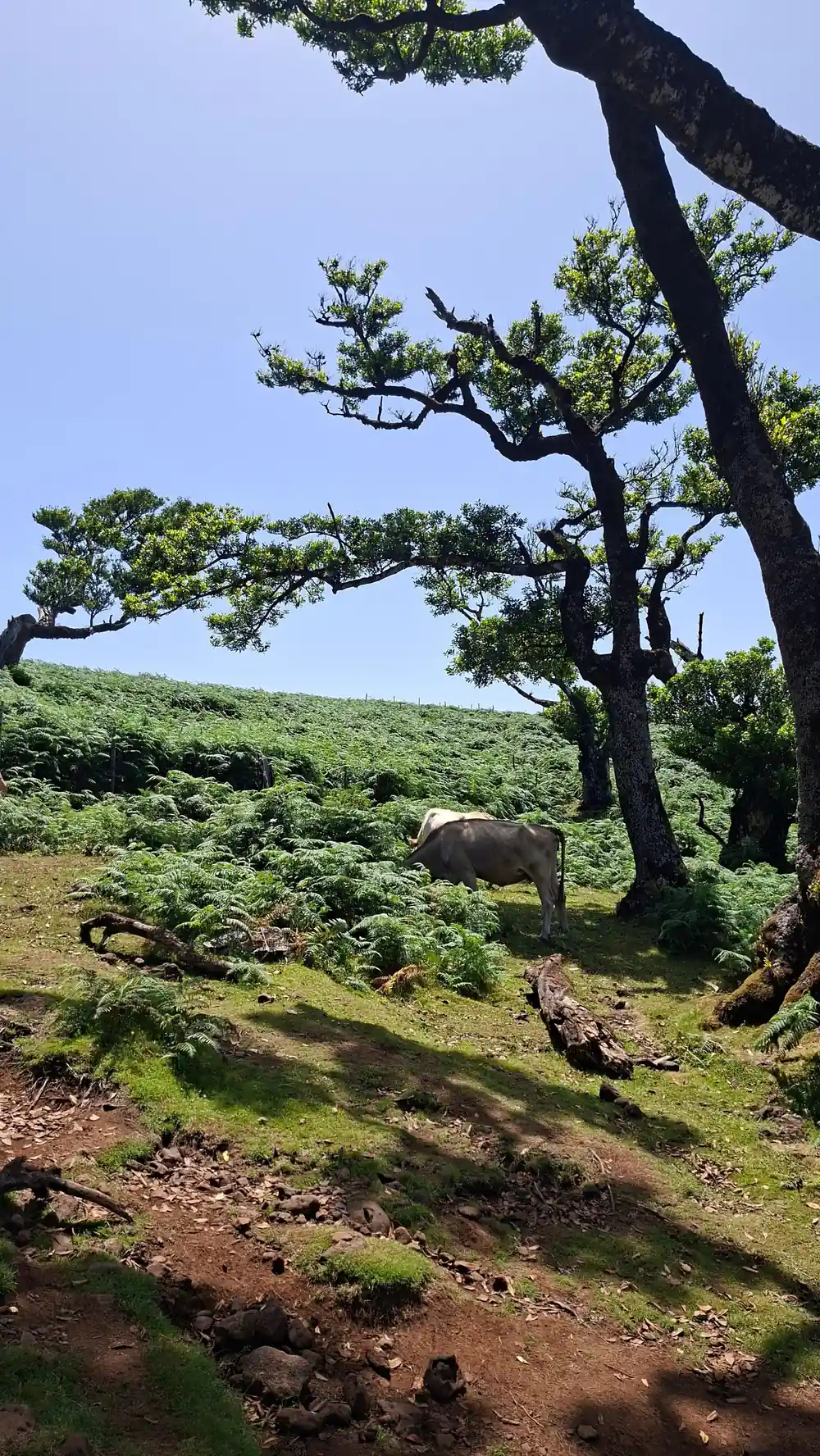
Mist rolling through Fanal's laurel forest, the west coast at its most atmospheric.
UV exposure at altitude and on the Skywalk
Sunburn catches people out in Madeira, and height makes it worse. Ultraviolet light is stronger as you climb, and it bounces back at you off the sea, off pale rock and off the glass platform at Cabo Girão, which was completed in October 2012 and is open daily from 08:00 to 20:00.[4][8] Cabo Girão is 580 metres high, so the drop in front of the platform is a long one, and the glare down there is bright enough to burn on a day that feels merely warm.[4] A hat, sunglasses and high-factor sunscreen are worth carrying on every west coast day, cloud or no cloud.
Expect a small charge at the viewpoint: there is an entrance fee of €2, except for residents and children up to 12 years old.[4] If you would rather go down than look down, a return trip on the Teleférico do Rancho cable car costs 10 euros.[9] It drops you at the Fajã do Cabo Girão beach, a narrow, lush piece of land known for the impressive fertility of its agricultural land and reached by cable car.[10] Do the descent in the morning if you can, when the cliff face is cooler and the light on the water is soft.
When Atlantic swell closes the volcanic pools
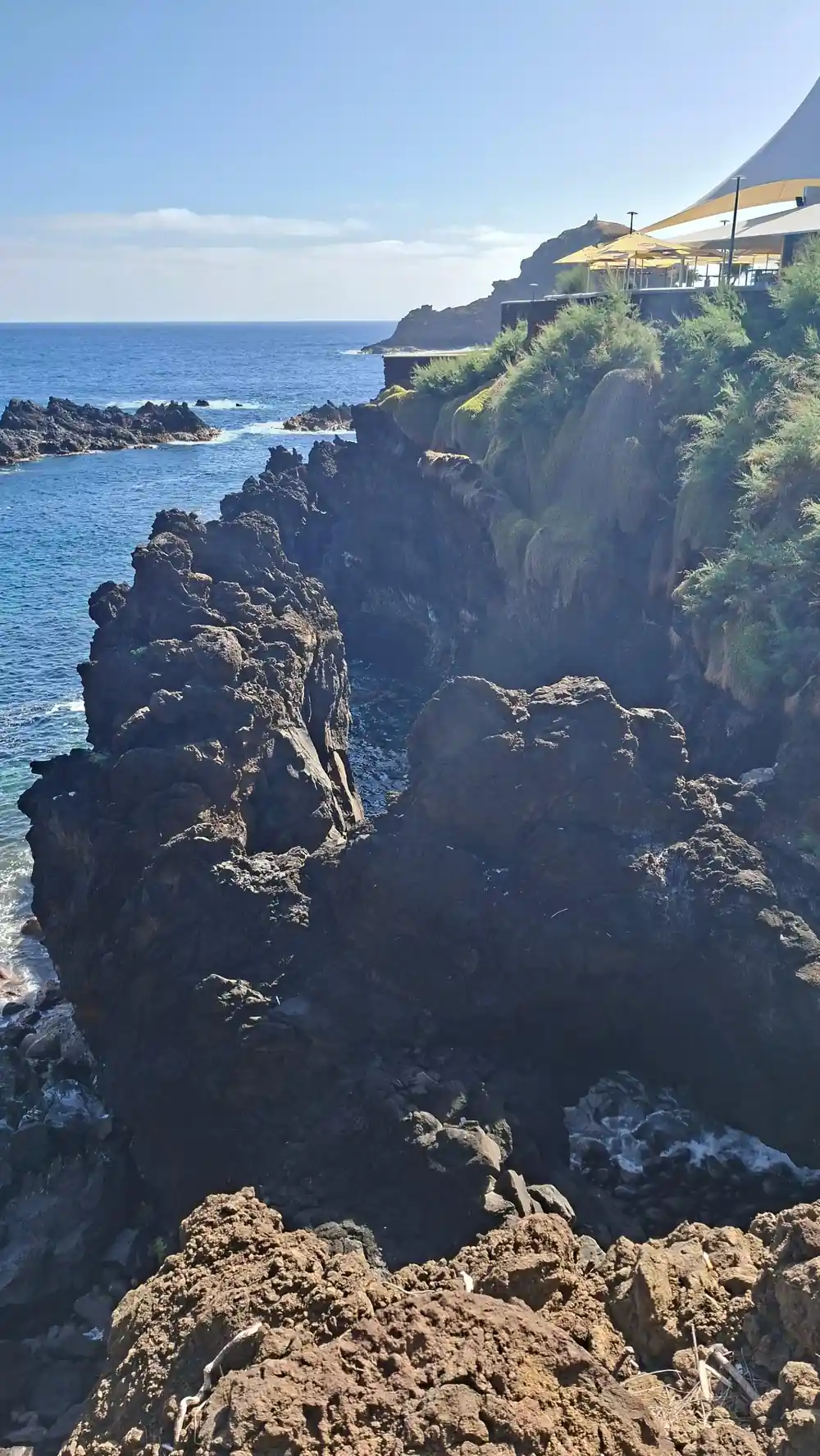
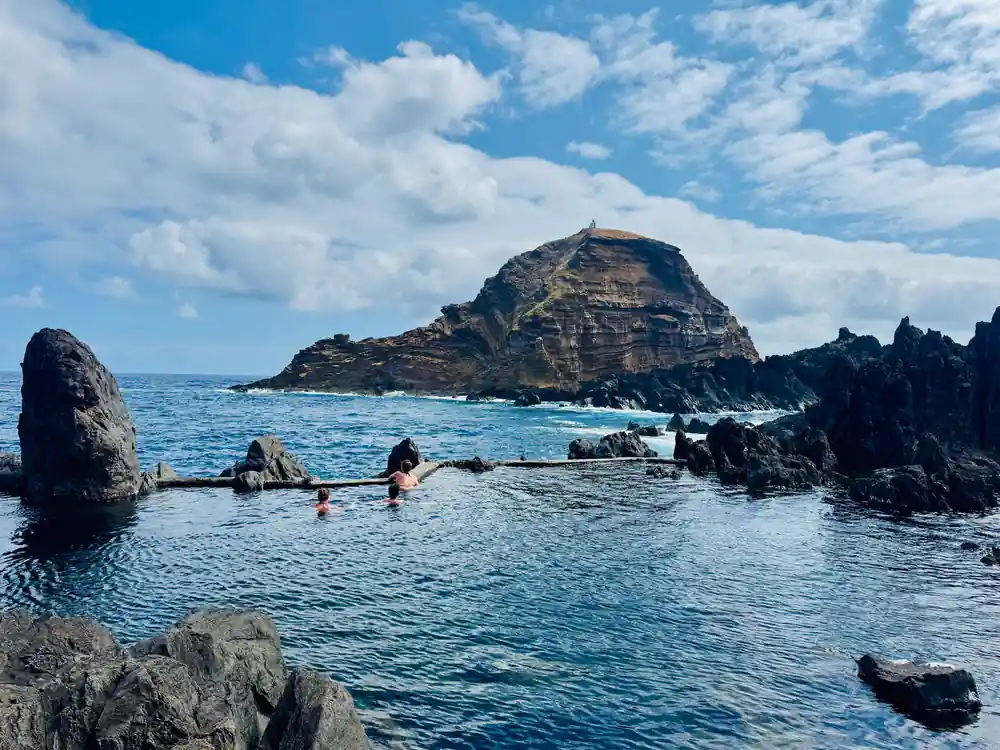
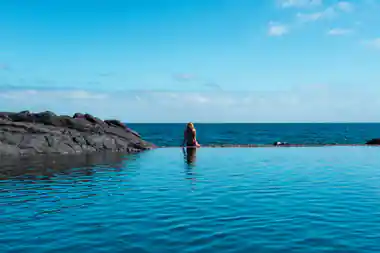
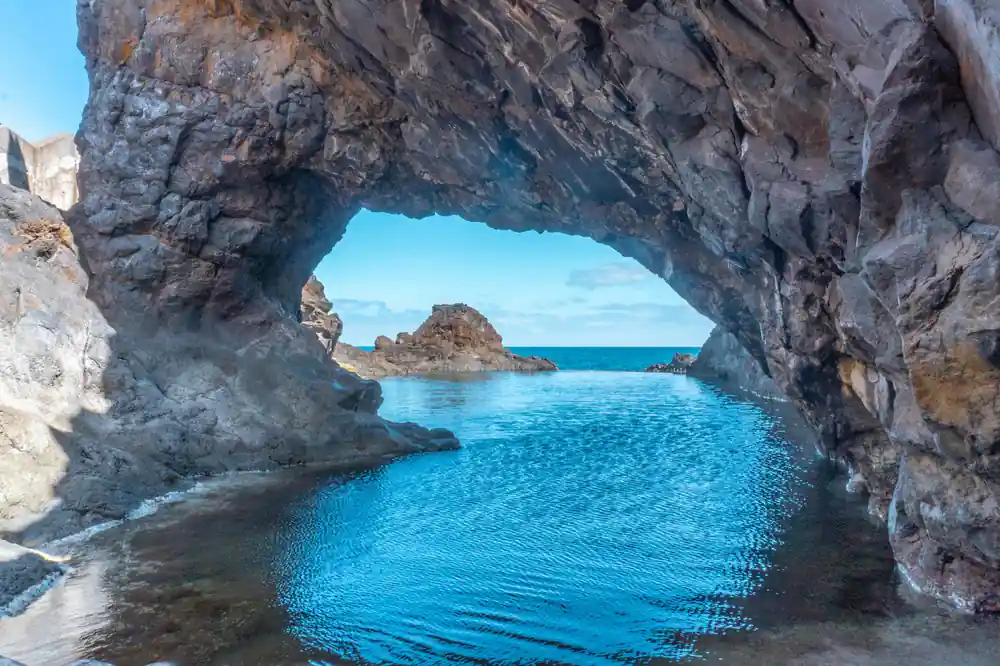
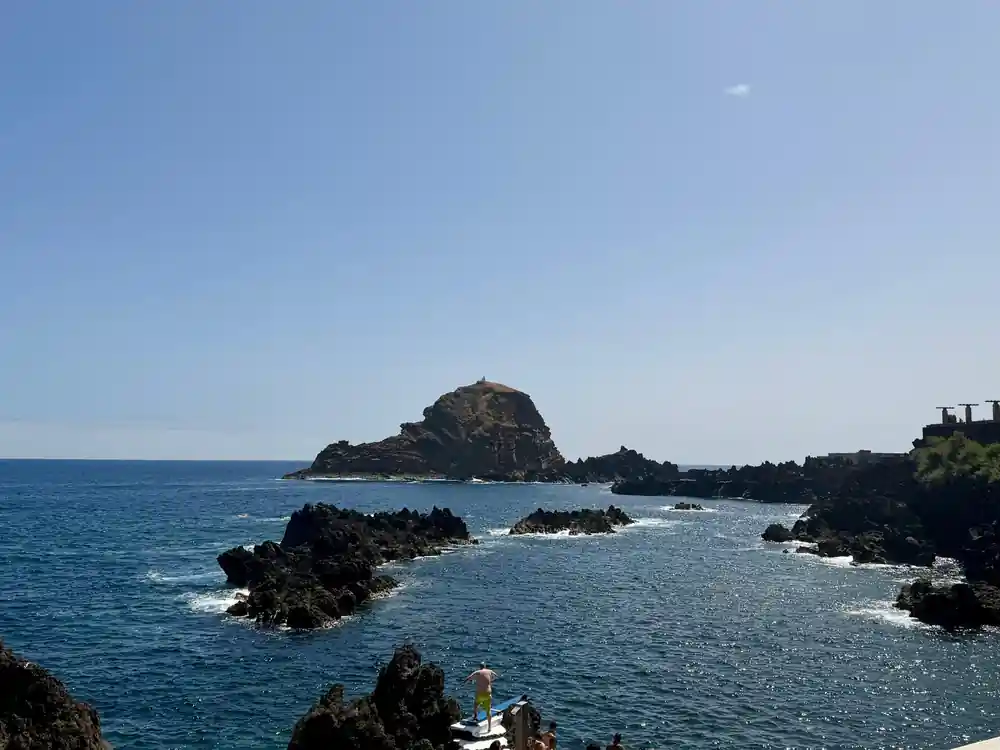
Porto Moniz is a highlight of the north coast: a chain of seawater pools built into black lava rock and refreshed by the tide. The complex is generous in scale, with a lounging area of approximately 3,217 m2 and a swimming area of 3,800 m2 that is 2 metres deep, holding around 7,600 m3 of seawater.[11] On a calm, bright day it is an easy swim: clear water, no sand underfoot, and steps down into the rock.
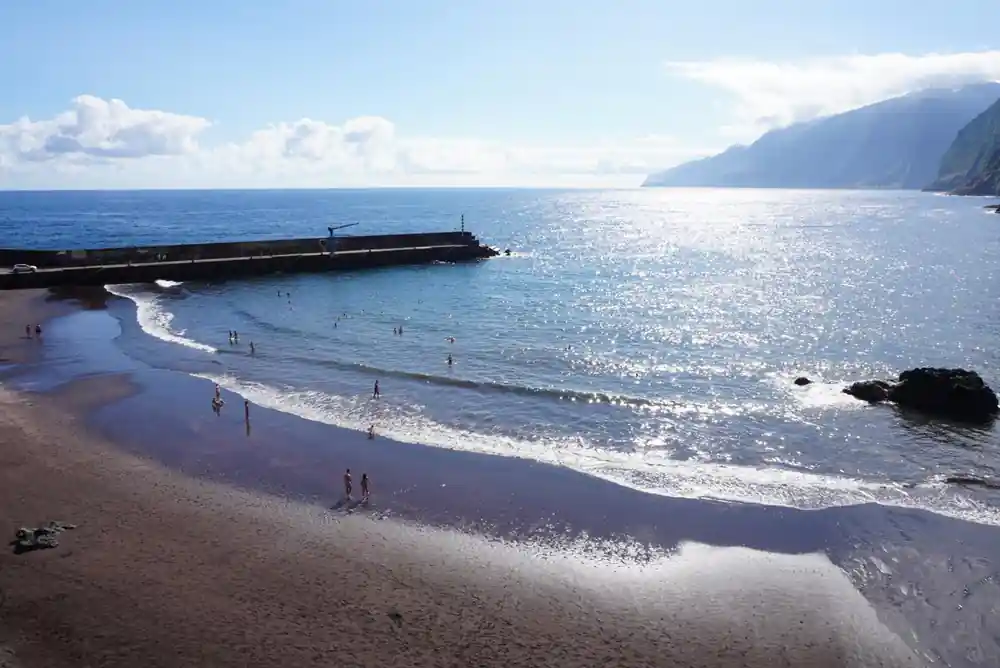
The Atlantic decides the rest. When a winter swell runs against the north coast, waves break over the outer walls and surge through the channels, and the pools can be closed for safety. High tide and a strong onshore wind do the same. There is no fixed calendar for this, so check conditions on the day, look at the flags and ask locally before you commit to a swim. The same advice applies at Seixal, which is also on the tour's stop list.[1] Pack a towel and a dry bag anyway: the north coast has a habit of changing its mind.
from US$79
The Skywalk, Porto Moniz, Seixal and Fanal 4WD Tour runs 8 hours, with free cancellation up to 24 hours in advance.[1]
How the open-roof 4WD and the route adapt in rain
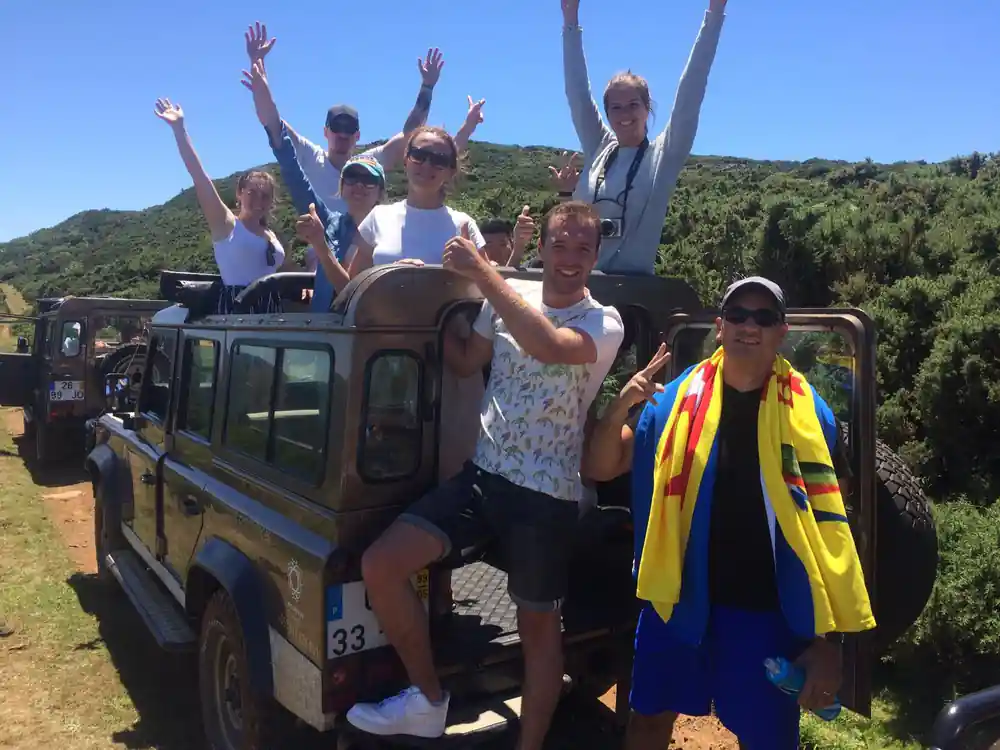
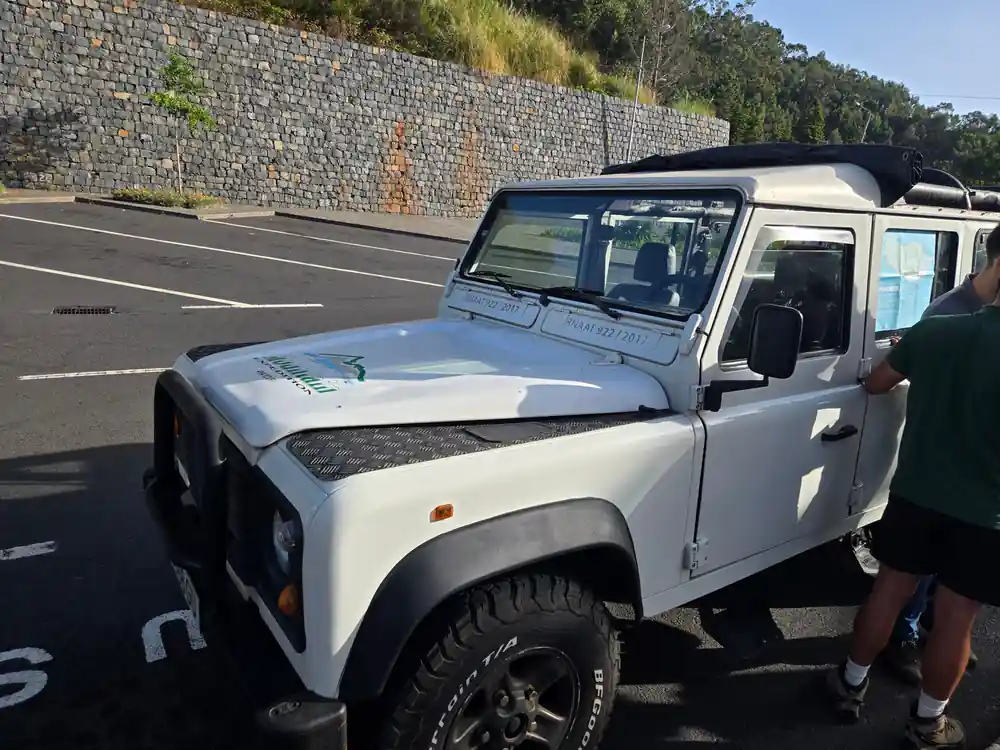
An open-roof 4WD sounds like a gamble on a wet island, and in a way it is, which is part of the appeal. When rain arrives the roof goes over and the day carries on, and on damp days the sheltered stretches give you time to dry off between stops. The tour runs 8 hours, and the listing points you to current start times when you check availability.[1] Private or small groups are available as well.[1] Keep your camera within reach and a cloth in your pocket; good light tends to arrive between showers.
Rain on Madeira is rarely a whole-day washout at low level, and on the west coast it does something useful: it feeds the waterfalls. The route takes in the Véu da Noiva viewpoint and the Lombinho waterfall, both of which look their best after a wet spell, when the water is full and the cliff faces are streaked white.[1] The trade-off is cloud on the high viewpoints, where you may get a wall of grey instead of an ocean view. Pack a light waterproof, keep a dry bag for your phone, and treat a hidden view as a reason to come back rather than a ruined day.
Best months for Fanal forest fog and laurel views
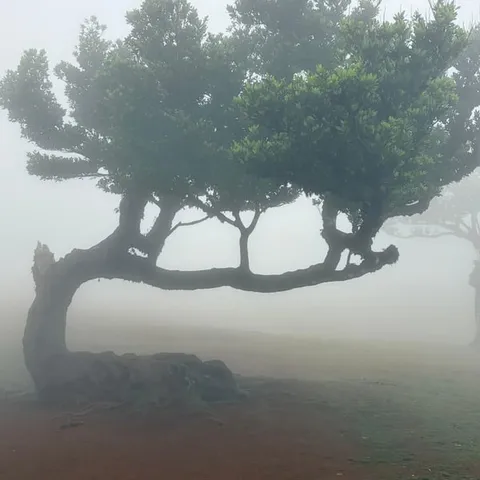
Fanal is the part of the west coast that stays with you longest. Madeira's tourism board presents it as a mystical century-old forest that visitors are invited to discover, and the description fits when mist is moving through the trees.[12] The forest is part of the island's laurel cover, the Laurissilva, which has been a UNESCO World Heritage Site since 1999.[12] The trees are old, mossy and twisted, and the ground stays soft underfoot, which is what you would expect from woodland that lives in cloud.
Fog is common in spring and autumn, and early mornings tend to be mistiest, before the sun has had time to lift it. In high summer you may get Fanal in full sun, which is lovely but far less mysterious, while in winter the fog can sit there all day. The tour stops at the Fanal Forest, the Fanal Pond and the Laurisilva de Madeira.[1] Wear shoes that can handle damp ground and give your eyes a minute to adjust; the light under the trees changes fast.
Winter and spring: is this tour worth doing in off-season?
On Madeira, when to visit is a question with several good answers, and the off-season is one of them. Winter here is mild rather than cold, and the south coast often turns out bright, still days while northern Europe shivers. That mildness has a long history: Winston Churchill painted the bay of Câmara de Lobos in January 1950 while sitting at the Espírito Santo Viewpoint facing the sea.[13] Câmara de Lobos is a stop on this route, so you can stand close to where he set up his easel.[1] Expect shorter days and more cloud on the high ground, but none of the deep cold that closes mountain roads elsewhere in Europe.
Spring is a strong choice, with longer days, waterfalls still running and enough warmth for the pools before summer crowds build. High summer is warm, dry and busy, so book the tour early if that is when you travel. If you want a walking day either side of the tour, the Levada do Norte walk runs from Estreito de Câmara de Lobos to Cabo Girão, following the water channel through terraced hillsides.[14] The tour is from US$79 and rated 4.87 from 9,297 reviews, you can reserve now and pay later, and free cancellation is available up to 24 hours in advance.[1]
From prices on the west coast route, in US dollars
From prices in US dollars for these GetYourGuide listings.[1][2][3][15]
Compare from prices for a west coast day
From prices in US dollars for these listings.[1][2][3][15]
When to go on the west coast
Plan around the weather
Watch the cloud, not just the rain
Look at the satellite picture in the morning; north coast cloud often sits in patches you can see moving.
Start from Funchal early
Early starts beat the traffic on the coastal road and usually reach the high ground before the cloud builds.
Pack for every season
Sun hat, warm layer, light waterproof. The gap between Funchal and the plateau is the reason.
Keep the booking flexible
Choose a date late in your stay and use free cancellation if the forecast turns truly grim.
Ask about the pools
Swimming at Porto Moniz depends on the sea, so ask your driver on the day before you unpack a towel.
Book the Skywalk, Porto Moniz, Seixal and Fanal 4WD tour
from US$80Reserve now & pay later