The quick version
- Pack a base layer, a warm mid layer and a windproof shell. The roof opens on the road and the plateau can be in cloud.
- Swimwear, a quick-dry towel and a bag for wet clothes. The tour stops at the Porto Moniz Natural Swimming Pools and at Seixal.[1]
- Closed shoes with grip for wet rock, forest paths and uneven ground around Fanal, the laurel forest and the skywalk.
- A dry bag or zip pouches for your phone and camera. Wind on the open road and spray near the coast both find their way in.
- The 4WD tour lasts 8 hours, pickup is included, and free cancellation applies up to 24 hours in advance.[1]
- Top choice Skywalk and Porto Moniz 4WD from US$79 Rating4.87 from 9,297 reviews[1]Pickup11 pickup location options[1]Guide languagesPortuguese, Spanish, English, French[1]HighlightsSkywalk, Seixal, Porto Moniz, Fanal[1] Check availability
- Enchanted Terraces 4WD from US$80 Rating4.78 from 5,647 reviews[2]Pickup22 pickup location options[2]Guide languagesSpanish, English, French, Portuguese[2]HighlightsPorto Moniz pools, Fanal Pond, Seixal[2] See this tour
- West Waterfalls and Fanal from US$40 Rating4.70 from 3,827 reviews[3]Pickup2 pickup location options[3]Guide languagesGerman, Spanish, English, Portuguese[3]HighlightsCabo Girao, Fanal, Porto Moniz pools[3] See this tour
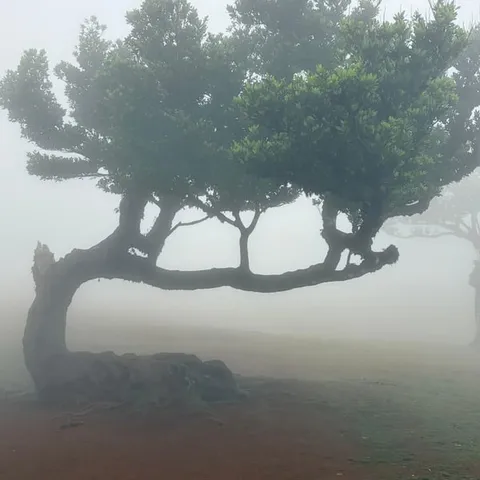
Fanal Come discover and contemplate a mystical century-old tis forest.
Is this open-roof 4x4 day worth it?
What to wear
- Sunglasses and a brimmed hat with a cord so it stays on in the wind
- A light windproof and water-resistant shell with a hood
- A warm mid layer such as a fleece for the plateau
- Trainers with deep tread for wet rock and forest paths
What to pack
- Booking confirmation and your pickup details
- A dry bag or zip pouches for phone, camera and documents
- Swimwear, a quick-dry towel and a bag for wet clothes
- A little cash for a coffee or a poncha at a village stop
Layering for an open-roof vehicle in changing altitude
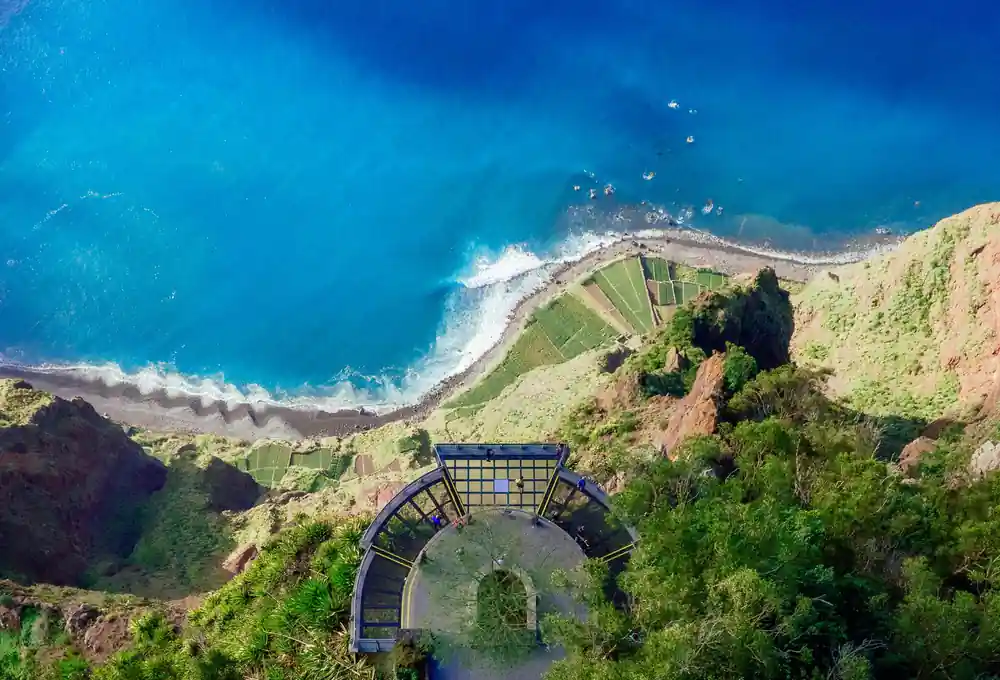
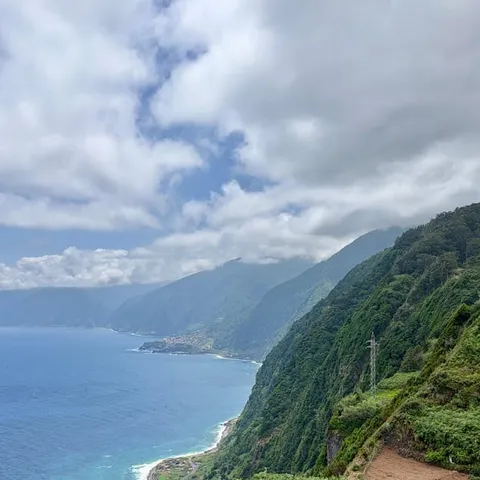
An open-roof 4x4 turns a sightseeing day into something you feel on your skin rather than watch through glass. The route runs from Funchal out to the Cabo Girão Skywalk, along the coast through Ribeira Brava and São Vicente, down to Seixal and Porto Moniz, and inland to Fanal Forest, the Laurissilva forest and the Paul da Serra plateau.[1] Cabo Girão is 580 metres high, and the skywalk on the cliff edge was completed in October 2012.[4][5] The viewpoint is open daily from 08:00 to 20:00, and entry costs €2, except for residents and children up to 12 years old.[4]
Think in three thin layers rather than one heavy jacket. A close-fitting base layer moves sweat away from your skin, a fleece or light down jacket holds warmth once you climb, and a windproof shell with a hood keeps the chill from cutting through while the vehicle is moving. Everything should be loose enough to pull on over your head from your seat and small enough to roll into a corner when the sun comes out. Skip long flapping scarves and anything that catches the wind; a buff or a close-fitting beanie works far better on an open vehicle.
Wind matters more than the thermometer on a day like this. You might stand at the skywalk in short sleeves and, a while later on the plateau, want everything you packed. Keep your warm layer at the top of your bag rather than the bottom, and choose fabrics that dry quickly, because you will be adding and removing clothes all day. Cabo Girão sits approximately 15 kilometres west of Funchal.[6] The route passes through Câmara de Lobos, where Winston Churchill painted the bay in January 1950 while sitting at the Espírito Santo Viewpoint facing the sea.[1][7]
Cold and fog on the high plateau
Madeira has a subtropical Mediterranean climate with even temperatures all year round and an average annual temperature of 20°C (67°F).[8] Those figures describe the island as a whole, and the high ground behaves differently. The Paul da Serra plateau often sits inside cloud while the coast below is bright, and the drop in temperature is felt the moment the vehicle leaves the sheltered south. Take the mid layer and the shell even in summer, and add a hat and thin gloves between autumn and spring.
Fanal is the stop where this matters most. Madeira's official tourism board invites visitors to discover Fanal as a mystical, century-old forest.[9] When mist settles among the trees the light turns soft and green, the paths become boggy and the air feels much cooler than the coast. A spare pair of socks in your bag is a small thing that saves a long afternoon, and shoes that keep water out are worth more here than anywhere else on the route.
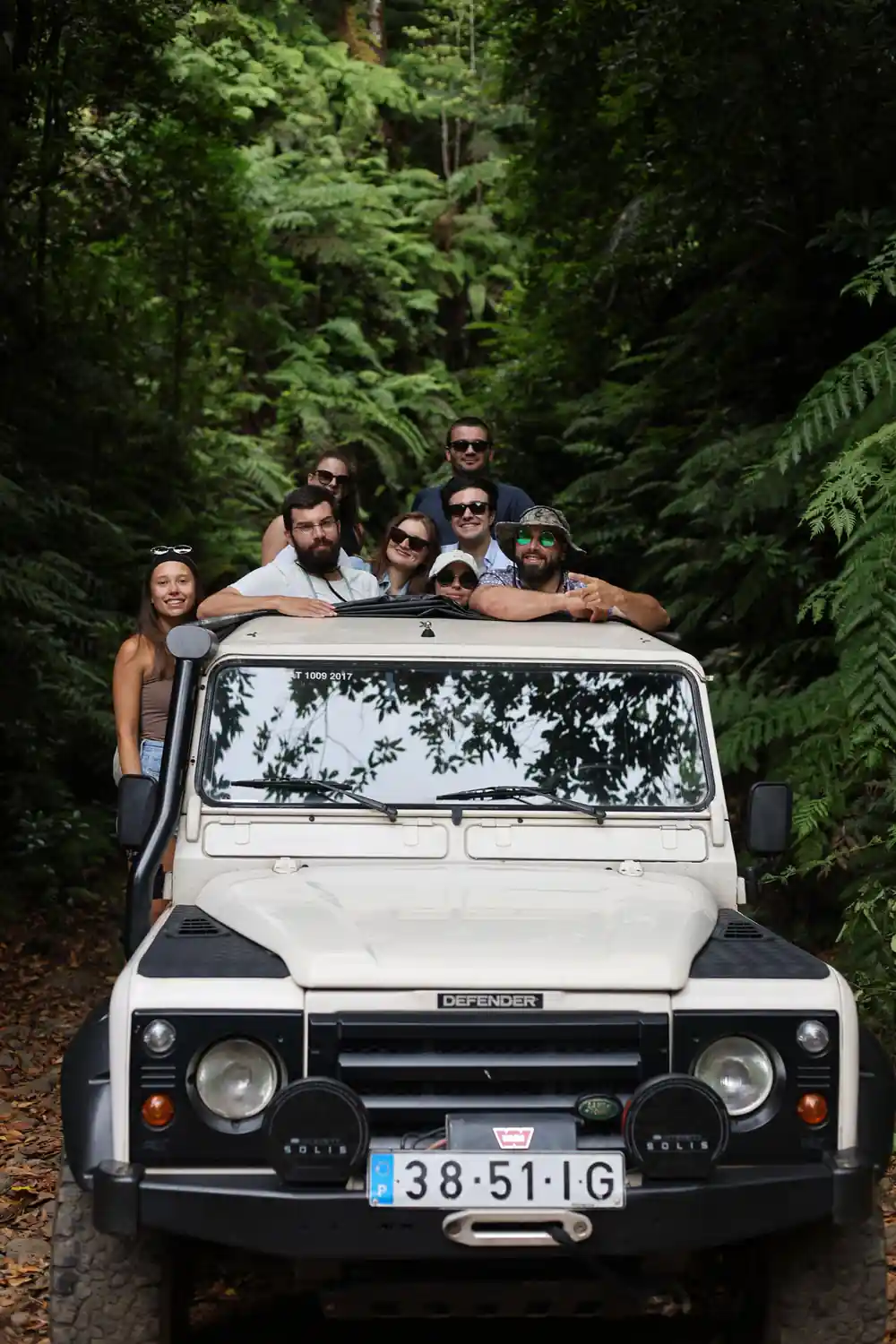
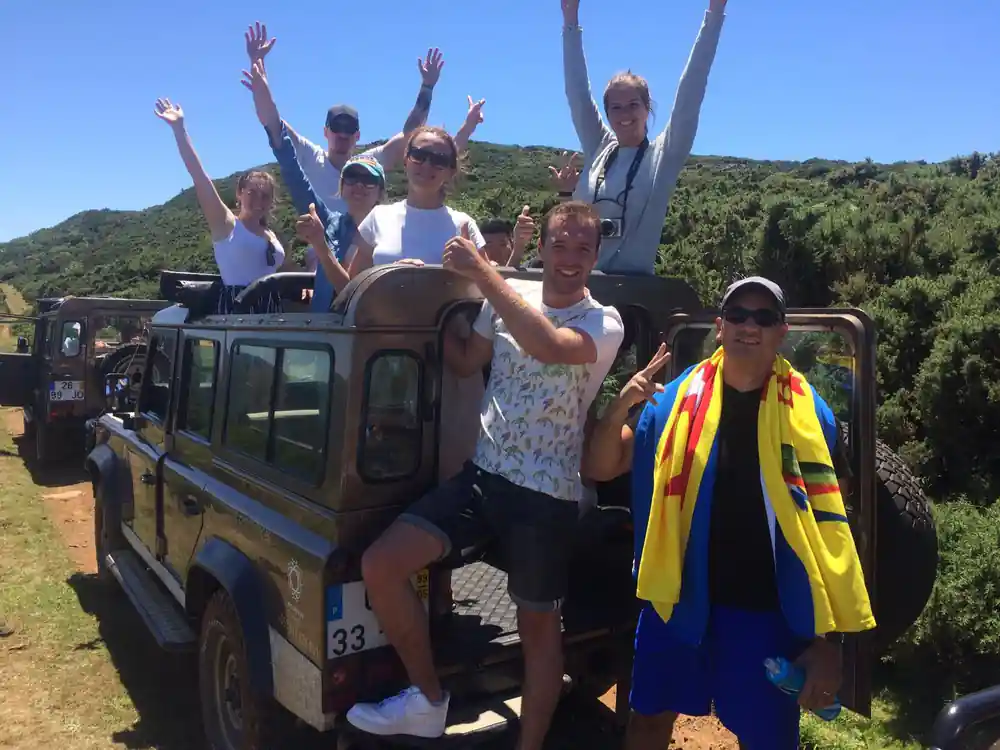
An open-roof 4WD above the north coast, roof down and cloud rolling in over the laurel forest.
Swimwear and towels at the natural pools
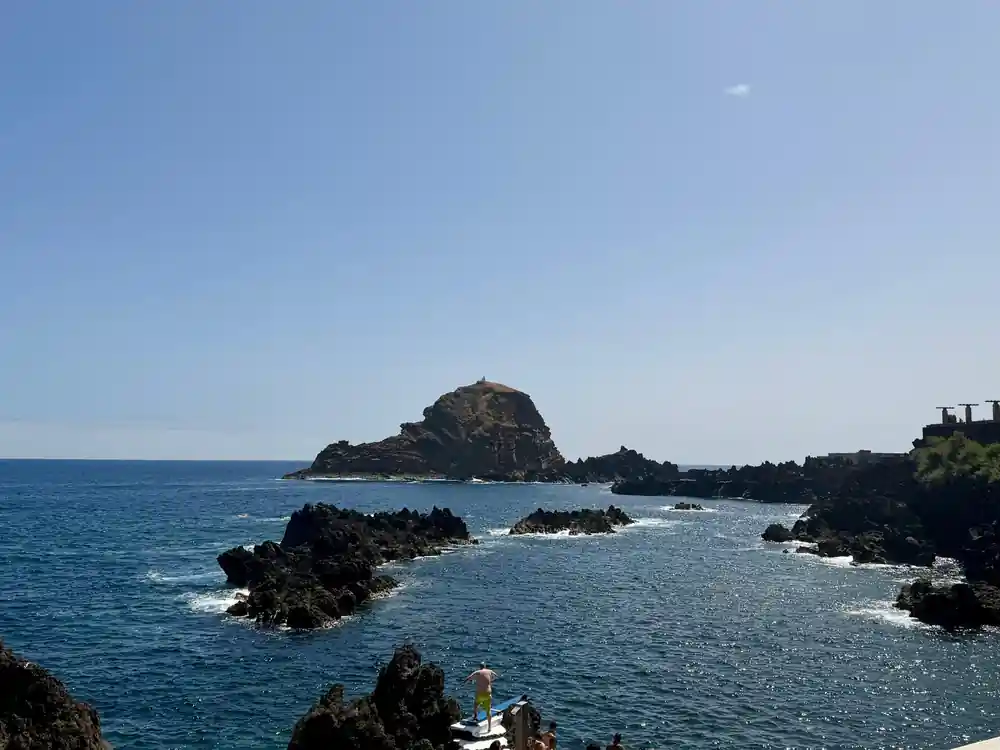
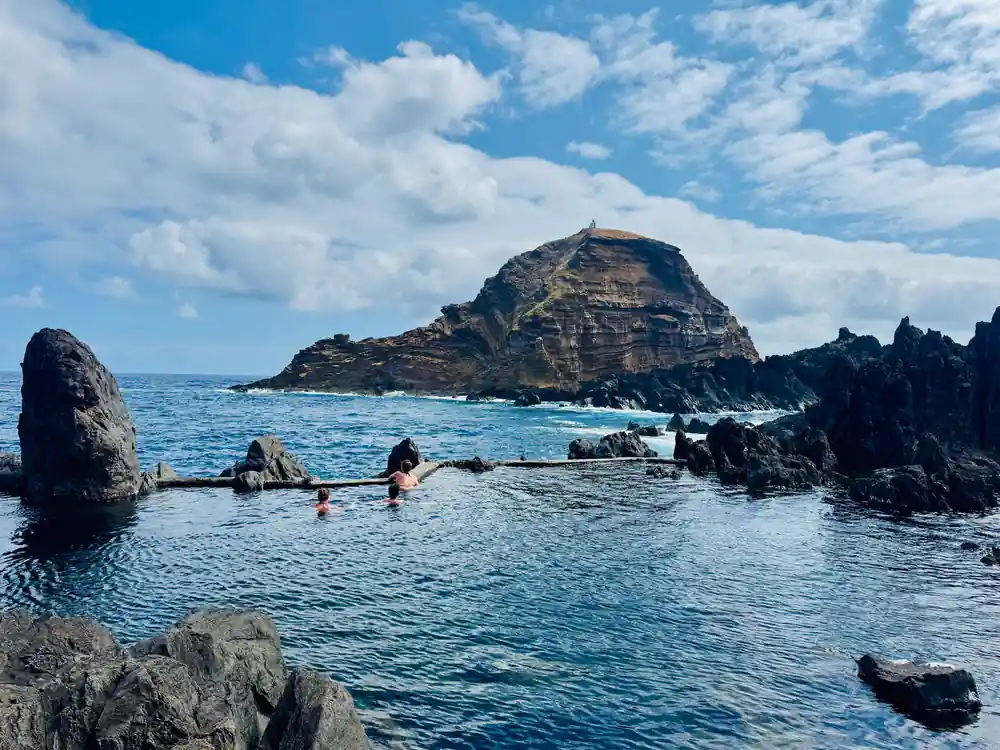
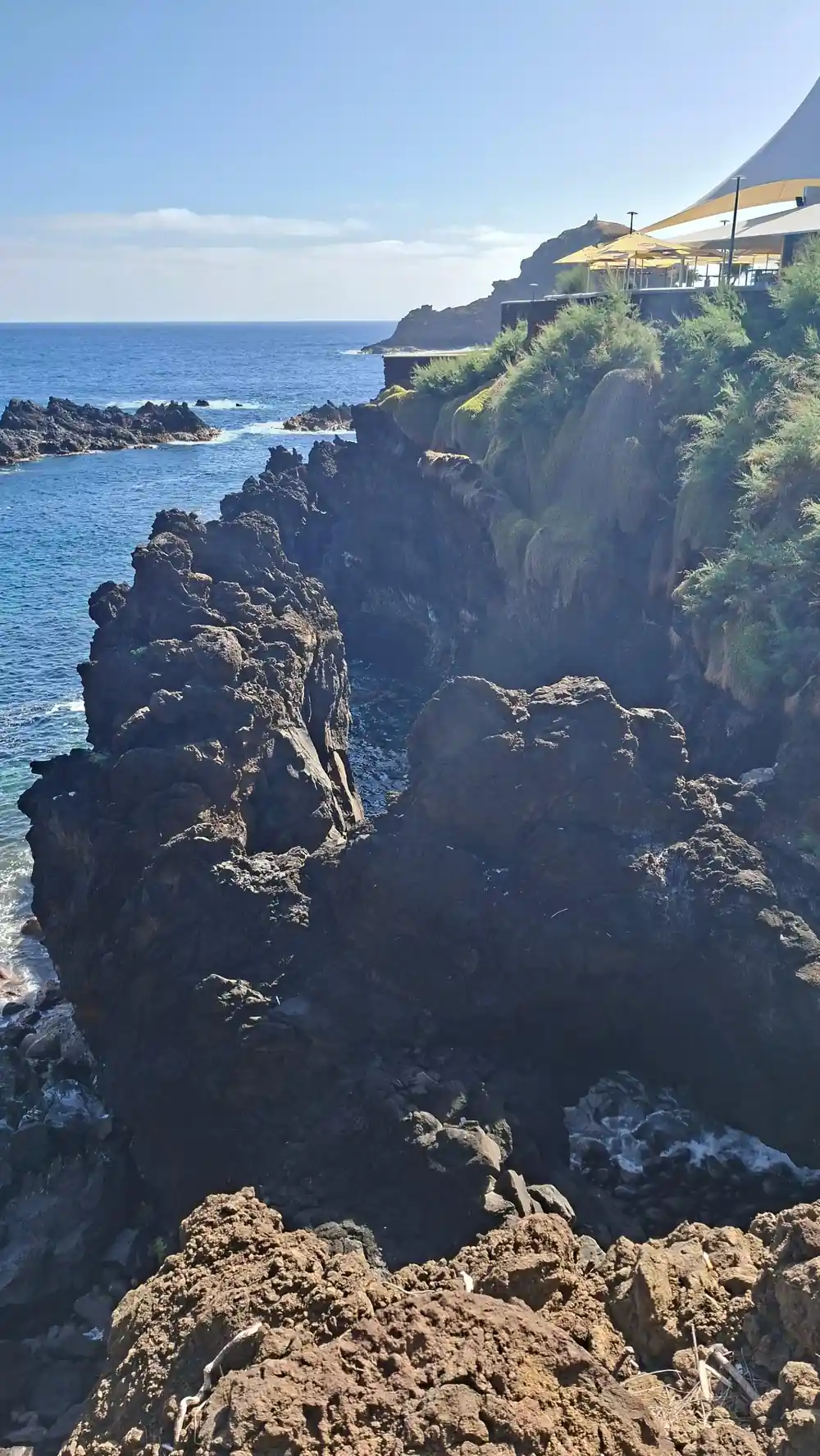
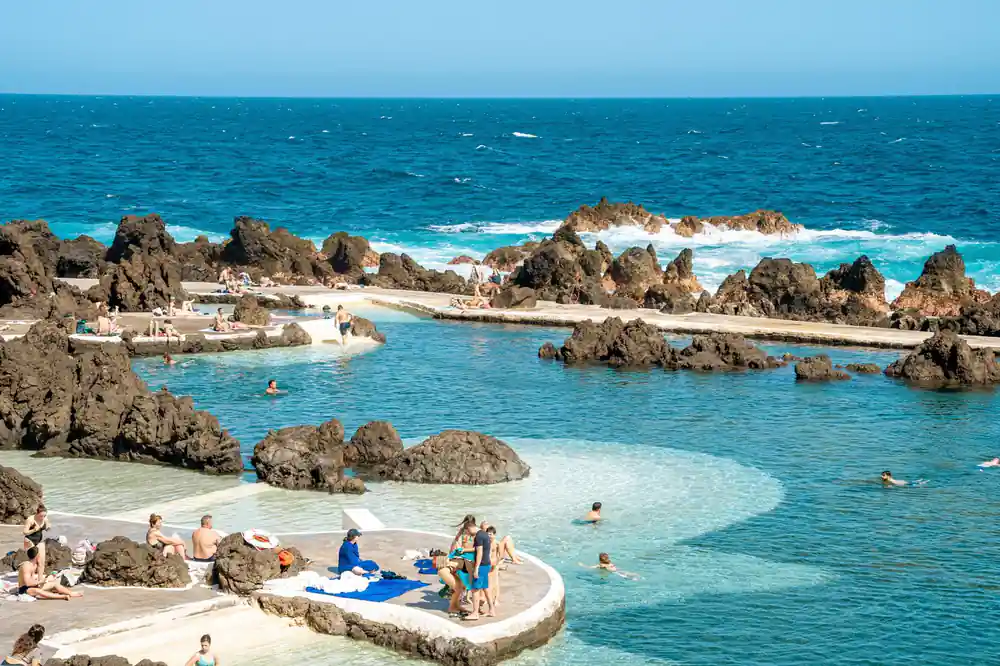
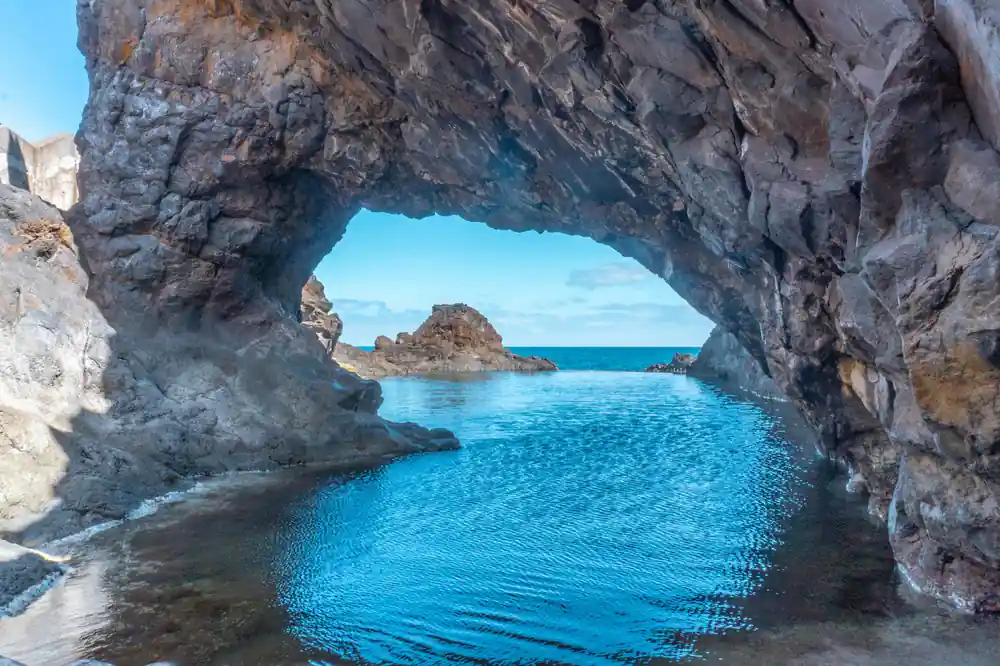
The tour stops at the Porto Moniz Natural Swimming Pools and at Seixal.[1] At Porto Moniz the swimming area is 3,800 m2 and 2 metres deep, holding around 7,600 m3 of seawater, and the lounging area is approximately 3,217 m2.[10] The pools are cut into dark volcanic rock and refilled by the Atlantic, so the water is cool, clear and salty rather than heated.
Pack swimwear you can change into quickly, a quick-dry towel and a plastic bag or dry sack for wet clothes. A rash vest helps if you plan to stay in the water, and lightweight water shoes make the rough rock at the pool edges kinder on your feet. Changing facilities at natural pools are basic. A loose shirt or a sarong over your swimwear makes the walk back to the vehicle comfortable, and a hotel towel is best left behind because a travel towel dries far faster between stops.
Footwear for wet rock, forest paths and uneven ground
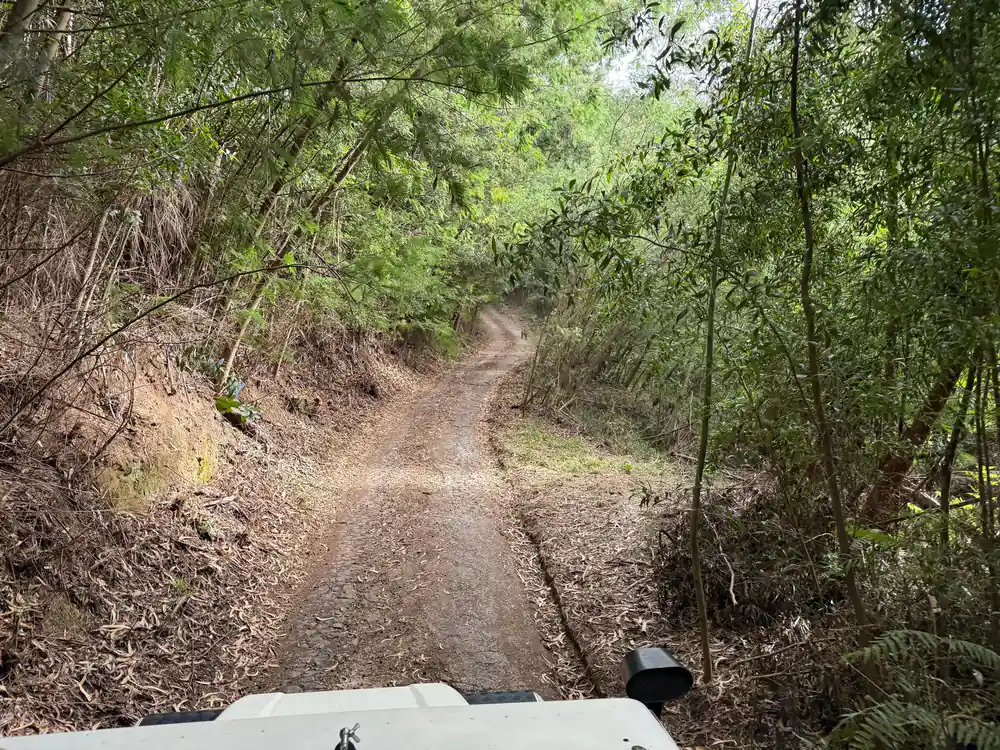
You will not be hiking for hours, but you will step out onto wet basalt, gravel, roots and mossy stone. The tour stops at Fanal Forest, Laurisilva de Madeira, the Fanal Pond and the Véu da Noiva Viewpoint.[1] Ground like that can be soft and slippery underfoot, so trainers with a deep tread are the sensible middle ground: light enough for a short walk and grippy enough for wet rock. Madeira's Laurissilva forest has been a UNESCO World Heritage Site since 1999.[9]
Leave smooth-soled fashion shoes at the hotel, avoid open sandals on the forest stops, and do not break in new boots on a day like this. If you want to add a walk on another day, the Levada do Norte route runs from Estreito de Câmara de Lobos to Cabo Girão.[11] For the tour itself, one comfortable pair of shoes and spare socks is enough. Flip flops are fine for the pools, but keep them in your bag for the drive rather than on your feet.
from US$79
The Skywalk, Seixal, Porto Moniz and Fanal 4WD Tour takes 8 hours and offers free cancellation up to 24 hours in advance.[1]
Protecting phones and cameras from wind and spray
Wind is the real enemy of small electronics on an open-roof day. Road dust, salt spray near the coast and fine drizzle on the plateau all find their way into ports, lens rings and charging sockets. A zip-lock bag or a small dry sack costs almost nothing and has rescued many a phone on trips like this. Keep it inside a zipped pocket rather than an open one, and use a wrist strap whenever the camera comes out.
A microfibre cloth is worth carrying for the lens; mist and fingerprints are constant. If you shoot on a phone, a lanyard keeps it off the seat and out of the wind, and a small power bank earns its space since cold batteries drain faster than you expect. Resist changing lenses in the open air, particularly at the skywalk and up on the plateau. If you plan to fly a drone, check the current local rules before you travel.
Seasonal fog, rain and sun protection
Madeira's weather changes with altitude and with the side of the island you are on. A single day can bring bright sun on the south coast, drizzle in the laurel forest and thick cloud on the plateau, and the north coast around Seixal and Porto Moniz often carries more cloud than Funchal. Pack a light rain jacket instead of an umbrella; on an open-roof vehicle the wind will turn an umbrella inside out within seconds.
Sun protection matters just as much. The skywalk and the coastal viewpoints offer almost no shade, and the breeze that keeps you cool also hides how strong the sun feels. Bring high-factor sunscreen, sunglasses and a hat with a cord or a tight fit, and reapply after a swim. Elsewhere on the island, at Santana, the Guindaste Viewpoint sits on a slope of the Foz da Ribeira do Faial and looks out over the north coast, another spot where a windproof layer earns its place.[12] In winter the mornings and evenings are cool enough for gloves, especially up on the high ground.
Bags, storage and what to carry during the day
An open-roof 4x4 has no luggage rack, so bring one soft bag rather than a hard case, and keep it small enough to sit under your legs or on your lap. The tour has 11 pickup location options and 11 drop-off locations, and pickup is included.[1] Everything you carry, you carry all day. A crossbody bag or a small backpack is easier to manage than a tote that slides across the seat on bends.
Inside it, keep water, a snack, sunscreen, a hat, a thin rain shell, your swim kit and a dry bag for electronics. A refillable bottle saves on waste. Small notes in local currency are handy for a coffee or a poncha at a village stop, and card readers are common in the bigger places. Leave valuables in your hotel room where you can, and keep a warm layer within reach rather than buried at the bottom; the plateau is where you will want it.
If you have time on either side of the tour, the Fajã do Cabo Girão beach below the cliff is known for the impressive fertility of its agricultural land and can be accessed by cable car.[13] A return trip on the Teleférico do Rancho cable car costs 10 euros.[14]
From prices for west Madeira day tours
From prices from the GetYourGuide listings cited here:[1][2][3][15][16]
Compare 4WD and jeep tour prices in US dollars
Amounts are from prices in US dollars from the GetYourGuide listings cited:[1][2][3][15][17]
When to Book Your Open-Roof 4x4 Day
How to pack for the day
Start with a base layer
A thin merino or synthetic tee dries fast and keeps working when the wind finds a gap in your outer layer.
Add a warm mid layer
A fleece or light down jacket is the piece you will reach for on the Paul da Serra plateau, where cloud can sit for hours.
Finish with a windproof shell
A light hooded shell breaks the wind at the skywalk and keeps off the drizzle that hangs in the laurel forest.
Pack swim kit on top
Swimwear, a quick-dry towel and a plastic bag for wet clothes keep the rest of your gear dry after Porto Moniz.
Seal phone and camera
A zip pouch or dry bag goes in before the roof opens, with a lens cloth and a power bank alongside it.
Keep a spare layer handy
The vehicle is your wardrobe for the day, so leave a jumper within reach instead of under everything else.
Ready to pack for the west coast by open-roof 4x4?
from US$80Reserve now & pay later